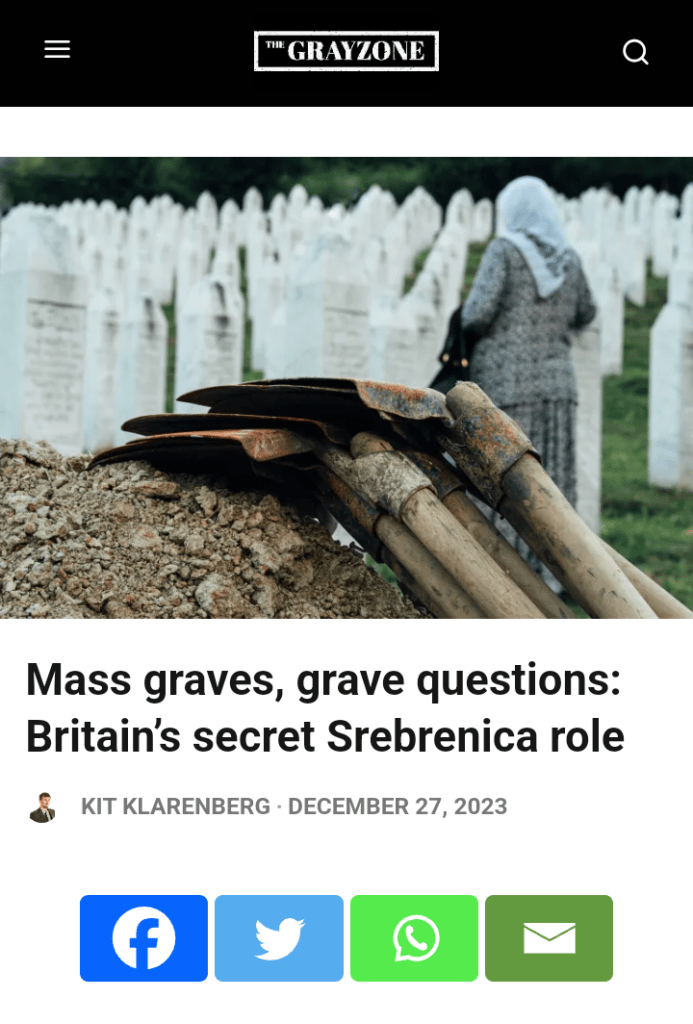
At the end of 2023, I started writing a reply to The Greyzone and their claims about the genocide in Srebrenica. Work, other commitments, as well as advice from friends saying; it’s probably a waste of time given that The Greyzone is a fringe site that panders to far-left “anti-imperialists”, far-right nationalists, the American “alt-right”, Assadists, supporters of the regimes in Iran, China, Russia, Maduro’s Venezuela and North Korea, led me to put it aside. A few days ago, while writing something else, I revisited what I wrote then, and seeing it with fresh eyes, realized that the The Greyzone article offers a chance to write in depth about things I’ve only touched on in earlier articles.
Kit Klarenberg, the author is or at least was at the time the article came out, based in Belgrade, Serbia. Online his work is shared by other genocide deniers and extremists like Nebojša Malić. Klarenberg even cites one of the articles Malić wrote for Antiwar.com in his own article about Srebrenica. Malić, a far-right Serb extremist who once compared a Gay Pride Parade in Zagreb to the Nazis usually writes for Russian state propaganda outlets Russia Today and Sputnik, like most Serb extremists he has gravitated towards red-brown revisionist sewer and conspiracy theories. Not surprisingly, before recycling Serb propaganda for The Greyzone, Klarenberg also wrote for Russia Today and Sputnik.
Klarenberg’s article is tailor-made to appeal to a certain audience, and all the usual tropes are there. It’s just another version of the standard Serb nationalist propaganda narrative that tries to shift the blame for the genocide in Srebrenica from Ratko Mladić and Radovan Karadžić to the Western powers, in this case particularly the United Kingdom ( Klarenberg clearly has an axe to grind) and the Bosnian government. It´s also a crude effort to discredit the International Criminal Tribunal for the former Yugoslavia ( ICTY). To show the lead-up to the genocide as a “chaotic situation”, and blame the mass killings on retribution for an alleged “cycle of violence” started by the Bosnian garrison under the command of Naser Orić, instead of a planned act of mass murder and a culmination of genocidal violence and pogroms against Bosniaks and other non-Serbs all along the Drina Valley that started in April 1992 and whose purpose was the creation of an ethnically pure Serb state (see: Edina Bećirević, Genocide on the Drina River, Yale University Press, 2014).
The claims of Serb propagandists and their fellow travelers in the West contradict the entire canon of serious scholarship, U.N. investigations and reports, decades of human rights investigations, exhumations of mass graves, decades of gathered forensic evidence, and the work of the ICTY (International Criminal Tribunal for the former Yugoslavia) that has spanned over two decades (1993-2017). As well as the work done by courts in Bosnia and Herzegovina, Croatia, Slovenia and even pre-Aleksndar Vučić´ Serbia. It can’t be overstated how big of thorn in their side the ICTY is. Hence this clumsy try by Klarenberg to discredit that work.
Which is also why Klarenberg’s article is loaded with precisely that same debunked Serb propaganda about Srebrenica, including the mind-boggling claim that only 2,000 rebel Serb soldiers participated in the takeover of the enclave. In October 2005, the then Bosnian Serb leadership under Dragan Čavić made public a list of 19,473 soldiers that took part in the operation. This list included over 800 people suspected of directly taking part in the mass executions. The entire list included members of the Serb rebel army ( VRS) as well as members of the ministry of interior (police) and the defense ministry.
Klarenberg also claims that during the NATO-bombing of Bosnian Serb military installations in August and September of 1995, over 2,000 Serb civilians were killed. This is not true. According to offical Bosnian Serb sources 51 Serb soldiers were killed, while another 98 was wounded. In fact there are no solid sources of information when it comes to civilian casualties of Operation Deliberate Force, some estimates put it at possibly 27-30 civilians, however it appears that there is no official Serb documentation on this. His claims most likely come from Serb propagandists. Klarenberg does not offer a source.
Klarenberg also claims that the ICTY is a NATO-created and funded tribunal. In fact the ICTY was established by the United Nations Security Council Resolution 827 in May 1993 as a response to the atrocities in former Yugoslavia, with Russia and China voting for the formation of the tribunal. It´s safe to say that the ICTY has been much more transperent about it´s work and funding then The Greyzone. In the same paragraph Klarenberg claims that very same ICTY conluded that the Serb planning for the takeover of Srebrenica began on June 30th, one week before the start of the Serb attack on the enclave. This is not true. On March 8th 1995, the Bosnian Serb president Radovan Karadžić signed Directive No. 7, ordering his troops to “create an unbearable situation of total insecurity with no hope of further survival or life for the inhabitants of Srebrenica and Žepa.”
This leads us to another ridiculous claim made by Kit Klarenberg; that only one person has been convicted for taking part in the mass executions after the fall of Srebrenica. This is of course not true and shows that Klarenberg either fundamentally misunderstands how the ICTY worked or he´s deliberately misrepresenting the facts to discredit the institution. While the ICTY focused on high-ranking officers in charge of organizing the mass executions, the courts in Bosnia and Herzegovina have so far sentenced 27 members of the VRS to 453 years in prison for direct involvement in the executions, these include: Franc Kos, Stanko Kojić, Zoran Goronja, Vlastimir Golijanin and Milorad Trbić for taking part in the executions of over 800 Bosniak prisoners. While Željko Ivanović, Brano Džinić, Radomir Vuković, Slobodan Jakovljević, Branislav Medan, Aleksandar Radovanović and Petar Mitrović were found guilty for the mass executions of Bosniak prisoners in Kravica.
Others are Srećko Aćimović, Slavko Perić, Srećko Bošković, Milenko Trifunović, Aleksandar Cvetković, Dragan Nešković, Zoran Ilić, Neđo Ikonić, Goran Marković, Zdravko Božić, Željko Zarić, Zoran Živanović, Miladin Stevanović, Marko Milošević, Miloš Stupar, Zoran Tomić, Velibor Maksimović, Dragiša Živanović, Milovan Matić, Miodrag Josipović, Branimir Tešić, Dragomir Vasić, Danilo Zoljić, Radomir Pantić and Slavko Milovanović. This has all been made possible through the decades long cooperation between the ICTY and the courts in the region, most prominently in Bosnia and Herzegovina.
It should also be noted that so far, Bosnian courts have convicted a total of 183 members of the VRS to a total of 2390 years for war cirmes and crimes against humanity committed throughout the country.
Courts in Serbia have senteced Branko Gojković, as well as Slobodan Medić, Branislav Medić, Pero Petrašević and Aleksandar Medić, members of the Serbia´s state-sponsored paramilitary unit The Scorpions (Škorpioni). A court in Croatia convicted another two members of The Scorpions: Milorad Momić and Slobodan Davidović for taking part in the executions of Bosniak prisoners from Srebenica.
The International Criminal Tribunal for the former Yugoslavia found the former Bosnian Serb president Radovan Karadžić guilty of among other things: ordering the genocide in Srebrenica, persecution on political, racial and religious grounds for municipalities across Bosnia and Herzegovina, Srebrenica included. Other counts were murder, extermination, deportation and other inhumane acts.
In 2017 the ICTY found the former commander of the Bosnian Serb Army, Ratko Mladić guilty of a litany of war crimes, including murder, deportation, the seige of Sarajevo, crimes against humanity and genocide in Srebrenica.
In 2010 the ICTY found Ljubiša Beara, a former Serb colonel and head of security of the rebel Serb army guilty of genocide in Srebenica. According to the Trial Chamber: “Beara was the most senior officer of the Security Branch and had the clearest overall picture of the massive scale and scope of the killing operation. From his presence in Bratunac on the night of 13 July, to his personal visits to the various detention and execution sites and the significant logistical challenges he faced throughout, Beara had a very personal view of the staggering number of victims destined for execution. Steeped in this knowledge, he became, in the opinion of the Trial Chamber, a driving force behind the murder enterprise”. Beara was found guilty of of genocide, extermination, murder and persecution.
Along with Beara, Vujadin Popović, Chief of Security of the Drina Corps was found guilty of genocide, conspiracy to commit genocide, extermination, murder, persecution, forcible transfer, and deportation.
In 2012, the ICTY found Zdravko Tolimir, former “assistant Commander of Intelligence and Security” for the Serb rebels guilty of the crime of genocide, conspiracy to commit genocide, extermination, murder, persecution on ethnic grounds and forced transfer.
Other Serb high-ranking Serb officers convicted of genocide in Srebenica by the ICTY include Vidoje Blagojević, Radislav Krstić, Miroslav Dernojić, Dragan Obrenović, Vinko Pandurović and Drago Nikolić.
Aside from Srebrenica, the ICTY has convicted close to 70 prominent war-time Serbs of war crimes and crimes against humanity committed in Bosnia and Herzegovina, Croatia and Kosovo. This includes high-ranking politicans like Biljana Plavšić, Momčilo Krajišnik, Vojislav Šešelj, Milan Babić, Milan Martić, Goran Hadžić, Duško Tadić and Milomir Stakić. Mass murderers like Milan Lukić, Sredoje Lukić, Goran Jelisić and so on. High-ranking members of Serbia´s State Security apparatus like Franko Simatović and Jovica Stanišić, as well as heads of Bosnian Serb Ministry of Interior Mićo Stanišić and Radoslav Brđanin. Former Chief of the General Staff of the Armed Forces of Yugoslavia and Minister of Defence of Yugoslavia Dragoljub Ojdanić who was found guilty of deportation and forcible transfer of Kosovo Albanians. Slobodan Milošević died in a prison cell in Hague awaiting verdict.
While the work of the ICTY has been essential for establishing the historical record for the break-up of former Yugoslavia. As well as bringing some justice to victims, it has faced difficulties, mostly from Serbia, a country unwilling to come to terms with it’s recent past. On July 9th 2020, few days before the 25th anniversary of the Srebrenica genocide, former chief prosecutor of the UN International Criminal Tribunal for the former Yugoslavia (ICTY) warned in The Guardian that “several alleged genocidaires have fled to Serbia and found safe haven there, including political leaders and military commanders.”
Brammertz also wrote that “genocide denial and the glorification of war criminals inflict tremendous suffering on the survivors and their families. Leaders in the region have publicly denied the genocide, even calling Srebrenica a hoax and a lie. War criminals convicted by the ICTY are often hailed as heroes by prominent figures, while victims’ suffering is ignored, denied and disparaged.”
The baton, Brammetz added, has now been passed to regional courts. He praised Bosnia and Herzegovina, but noted that “3,000 more cases are yet to be processed, including in relation to Srebrenica.”
Of course I don’t think any of us should expect an article in The Greyzone by Kit Klarenberg about the hundreds of suspected war criminals still hiding in Serbia.
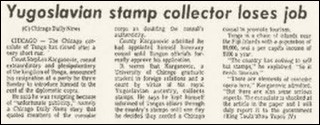
Klarenberg’s article is also full of links leading to the website of a shady Hague-based NGO called the “Srebrenica Historical Project,” run by a Serb-American grifter named Stefan Karganović, who in the 1970s pretended to be a “Yugoslav Count” who ran a consulate for the Kingdom of Tonga in Chicago.
In the past Karganović worked as a translator on convicted war criminal Momčilo Krajišnik’s defense team at the Hague, before rebranding himself as the front man of “Srebrenica Historical Project.” At the height of the pandemic, he engaged in Covid-19 denial for an obscure Russian-based website, comparing the Covid-19 pandemic to the Srebrenica genocide, the gist of it, of course, being that both the genocide and Covid-19 were a hoax. Karganović`s “experts” have been discredited both by Bosnian courts and ICTY, prime example being Ljubiša Simić, Karganović´s “neuro-forensics specialist” who has admitted under cross-examination that his name was not included on the list of court experts, he had at that time not passed a specialist exam and he had not testified at any trial before. He confirmed that no organization had certified him as an expert witness in forensic medicine, pathology, or DNA analysis. He had not participated in any exhumations, had never had performed an autopsy on his own and he had never performed an identification using DNA analysis.
One of the more amusing aspects of the Karganović saga, and the one that ultimately showed who he really is, was the story that ran in Bosnia and Serbia a few years ago. Someone had dug up an old story from Karganović’s days as a “Yugoslav Count” who ran a consulate for the Kingdom of Tonga in Chicago. The story, from 1973, ran in the Montana Standard. The consulate of the Kingdom of Tonga was closed soon after it opened. “Count Stephen Karganović” had announced the closing of the consulate and his resignation as consul because of a story in the Chicago Daily News that cited other consuls in Chicago who had expressed doubt in the authenticity of the consulate and Karganović himself. When interviewed about the allegations that he was a confidence man, Karganović claimed that he had first found out about Tonga through his stamp collection and decided the Kingdom needed a consulate in Chicago.
Another one of Klarenberg’s claims is that the Bosnian commander in Srebrenica; Naser Orić, was never prosecuted for his alleged crimes. This is of course also not true. Orić appeared before the Tribunal at the Hague in 2003, and in 2006 he was found guilty of not preventing the murder and cruel treatment of several Serb prisoners in the Srebrenica police station. The Trial Chamber heard a total of 82 witnesses, and a total of 1,649 exhibits were tendered into evidence. The prosecution could never prove that Orić himself had killed or tortured anyone and convicted him because he was the overall commander in Srebrenica and it was his responsibility to make sure that nothing happened to the prisoners. The case against Orić was so weak that in 2008 his guilty verdict was overturned on appeal as the defense managed to prove that Naser Orić was not in control of the military police, nor did he have effective control over those the prosecution claimed to be his subordinates. After that, Naser Orić was also tried in Bosnian courts, twice, with the prosecution there too being unable to link him to any alleged war crimes.
The trial at the Hague, which lasted over three years, plus his appeal, also helped further destroy claims made by Serb extremist propagandists. The evidence showed that most of the attacks launched out of Srebrenica were legitimate and of a defensive nature against the superior Serb forces surrounding the enclave, or simply attempts to find food for a starving populace. Serb forces had blocked any attempts at delivering humanitarian aid to the besieged enclave in order to starve the population. Places like Kravica and other Serb villages and hamlets were legitimate military targets as they were highly militarized staging grounds for attacks on the enclave, and people trapped in Srebrenica were shelled constantly from positions in and around those villages. Serbs used heavy artillery, sniper fire, and even aircraft to attack Srebrenica and the surrounding area.
While the enclave was defended by poorly armed and trained volunteer forces made up of locals and refugees who had escaped the initial Serb attacks and massacres that had been taking place all along the Drina Valley during the spring and summer of 1992. In the municipalities surrounding Srebrenica alone, Serb rebel forces massacred over 3,000 Bosniaks, many of them women, children, and the elderly, and destroyed close to 300 Bosniak villages, forcibly uprooting close to 70,000 Bosniaks in the first months of the Bosnian war.
Naser Orić’s trial also showed that the January 7th attack on Kravica was not a massacre, nor was there any religious motive for the attack that took place on Orthodox Christmas, as Klarenberg implies, again parroting other Serb war crimes apologists. The reasoning for the attack was borne out of necessity, in order to stop further murderous attacks on the civilian population of the town and out of sheer hunger. Serb forces had blocked any kind of humanitarian aid from arriving to the enclave for months and it was believed their guard would be down on Christmas, as well as the fact that there would be an abundance of food. The Trial Chamber noted that militarily superior Serb forces encircled the town and that there was an unmanageable influx of refugees there, as well as a critical shortage of food and a breakdown of law and order. The trial also showed, using official rebel Serb records, that Kravica was heavily militarized and one of the staging grounds for attacks on Srebrenica.
According to the Trial Chamber: Serb forces in Kravica fired artillery from houses and other buildings, which led to house-to-house fighting between Bosnian Army soldiers and the Serb rebels. Serbs located on hills north and northeast of Kravica fired artillery in the direction of Kravica. Serb witnesses observed shells landing on houses in Kravica, causing fire. During the trial, it was established that a large number of houses in Kravica were also destroyed during the Serb counter-attack on the village in March 1993. According to official Bosnian Serb sources: 35 Serb fighters were killed, another 36 wounded, along with them 11 Serb civilians were also killed during the fighting on January 7th.
Klarenberg, like other apologists for Serb war crimes, deliberately presents the actions of Bosnian defenders in Srebrenica as coming out of the blue, unprovoked, not as a response to Serb attacks. He focuses on the testimony of a French General and a journalist (John Pomfret) who´s clearly antagonistic to Naser Orić, yet his article on Orić never mentions any actual wrongdoing. Pomfret doesn’t like the vibe he gets from then 27-year old tough guy Orić and his boasting. Yet we see daily clips from Ukraine, Gaza and other war zones of soldiers posting clips boasting. Boasting about killing someone who’s trying to kill you is not a war crime. It’s self-defense. Like other Serb apologists Klarenberg discards the evidence and testimony that contradicts the narrative he’s trying to construct. The was nothing in the article that could be used as evidence against Naser Orić, while Phillipe Morrillon´s testemony was contradicted by other UN officals, as well as the investigations that came after the war, many of them using offical Bosnian Serb records to map what happened in the area.
Klarenberg stays silent about all the massacres, systematic sexual violence and pogroms taking place in eastern Bosnia and all along the Drina Valley during the spring and summer of 1992 in towns like Bijeljina, Višegrad, Vlasenica, nearby Bratunac, Foča, Zvornik, Rogatica, and Kalinovik. This resulted in the deaths and displacement of tens of thousands of people, many of them having lost everything fleeing to Srebrenica. As well, the Serb offensives in the fall and winter aimed at destroying the remaining enclaves in the area where the surviving Bosniaks had fled to. The destruction of those enclaves would mean achieving the goal of physically removing Bosniaks from their ancestral homes in the Drina Valley to guarantee an ethnically pure Greater Serbia.
Another aspect of the genocide in the Drina Valley and the broader Bosnian genocide is physical eradication of cultural heritage. Rebel Serb forces destroyed hundreds of mosques along the Drina Valley. Serbs desperately trying to deny the country’s Islamic and multi-ethnic heretige, dynamited or plowed over libraries, museums, universities, historical monuments and cemeteries but most of all mosques. According to Bosnia´s Islamic Community ( Rijaset Islamske zajednice) a total of 614 mosques was destroyed during the Bosnian genocide. As well as 218 other places of worship for Muslims. The list also includes 69 mektebs ( Islamic schools) 4 Taqiyyas, scores of mausoleums, and 405 other objects listed by the Rijaset. Serbs also used Muslim gravestones as objects for target practice for their soldiers. After the fall of Srebrenica, Serb forces destroyed 22 mosques in the former enclave.
In April 2011 Bosnian TV aired never before seen footage after the fall of Srebrenica. On the footage we could see the then bishop of the Serb Orthodox Church for Tuzla and Zvornik, Vasilje Kačavenda arrive at a gathering on 13th of July in the town of Vlasenica. Vlasenica is only a short drive away from Srebrenica. He was joined by a of number of Bosnian Serb officers including the former commander of the Drina Corps, Milenko Živanović. During his speech Živanović pointed out to the fact that when he entered Srebrenica he saw a minaret, pointing up towards the sky. The minaret from the town’s main mosque. He continued by saying: “that minaret should by now be in ruins.”
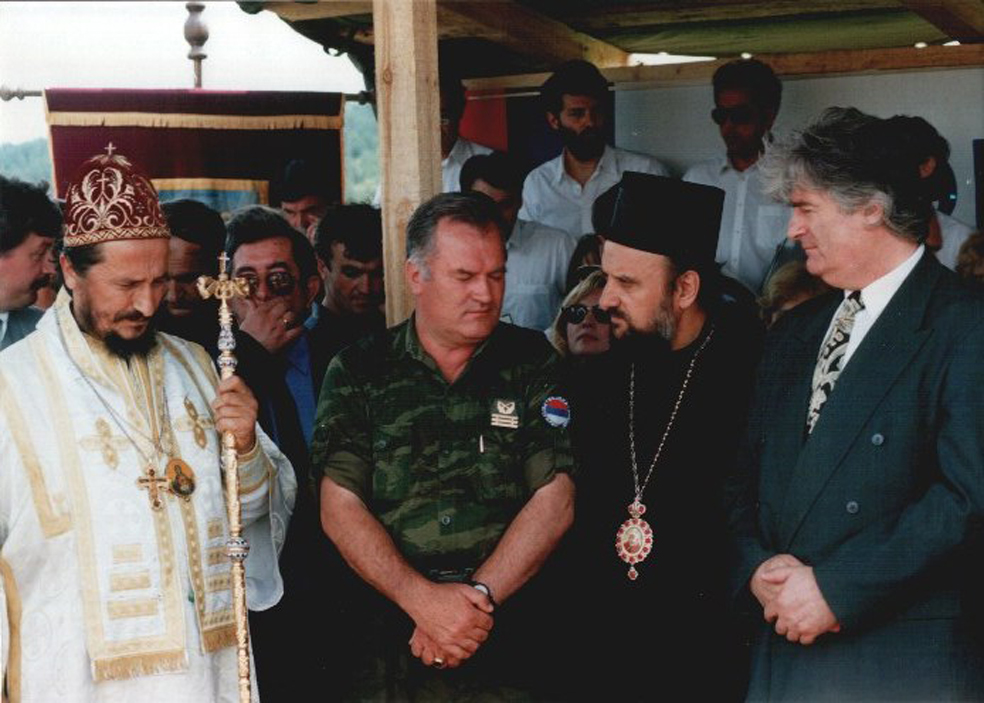
In April 2013 Vasilije Kačavenda resigned his clerical duties following a sex scandal that rocked the Serb Orthodox Church. According to a statement given by a former theology student in Bijeljina, the seat of Kačavenda´s diocese: “ He observed numerous orgies organized by the 74-year-old bishop and attended by fellow clerics and prominent businessmen. According to the student Kačavenda personally appealed to him to supply young children for sexual purposes and frequently called on high-ranking church officials to organize trysts with young theological students.”
Another one of Klarenbergs´s attempts at shrouding his deception with a veil of credibility is that he cites the report of the United Nations Secretary-General Kofi Annan on the fall of Srebrenica from 1999 in order to implicate the Bosnian president Alija Izetbegović in the fall of the enclave. Yet he´s clearly either cherry-picking or he hasn´t actually read it? It contradicts most of the claims Klarenberg makes in his article. In the very same report it says that the Bosnian president denied ever making any claims about the fall of Srebrenica. In fact, most of the report contradicts Klarenberg´s claims. And the report came two years before Radislav Krstić became the first Bosnian Serb convicted for the crime of genocide at the ICTY.
The report pointed out that despite a UN mandate to deter attacks on towns that had been designated “safe areas” in 1993; Serb forces killed close to 20,000 people, predominantly Bosniaks in and around those “safe areas”. The report also states that during the initial Serb attack on Bosnia and Herzegovina; Serb forces killed tens of thousands predominantly Bosniak civilians. This list also includes many Croats, anti-nationalist Serbs, people from mixed marriages, members of the Muslim Roma community and others.
The report goes on to say that Serb forces also forcibly displaced or “ethnically cleansed” approximetly 1 million non-Serbs from a territory they had seized during the first months of the war. That Serb forces also severely restricted the flow of humanitarian aid to Srebrenica and other enclaves. The U.N. report does say that the Bosnian government objected to the evacuation of people from Srebrenica in March and April 1993, but Klarenberg in his article omits to point out that the only reason the Serbs agreed to the evacuation is because it would mean the completion of the ethnic cleansing of that part of Eastern Bosnia, which is why the Bosnian government objected to it in the first place.
The report also points out that the Serbs did not remove their heavy artillery from around Srebrenica. Instead they used it to shell the area. Moreover, blocking aid to the enclaves and taking UN-personnel as hostages on several occasions. A delegation from the UN-Security Council, led by Diego Arria arrived in Srebrenica on April 25 1993 and in its report the UN condemned the Serb forces for carrying out that what was called a “slow-motion process of genocide”. Contrary to what Klarenberg claims in his article, the UN report also cites several military experts as well Dutch peacekeepers in Srebrenica saying that the Bosnian garrison there posed no significant military threat to the Serb forces.
The Serbs on the other hand were well-armed and prepared for war. According to the report: they had several thousand soldiers from several brigades taking part in the blockade and siege of Srebrenica. Additional units, including special forces and reconnisense units could be brought in at short notice. They had tanks, APC´s, artillery and mortars, as well as controlling key strategic points. They were well supplied and the Serb officers were on the payroll of the Yugoslav Army.
In contrast, according to the U.N. report: the Bosnian garrison in Srebrenica was poorly armed & trained, with very few heavy weapons they had managed to hide and low morale as well as non-existent communications and logistics. This was attributed by the UN to the demilitarization agreements of 1993, as well as the fact that UNPROFOR in the enclave sought to disarm any armed member of the Bosnian Army while the Serbs could do as they pleased.
The gist of what Klarenberg tries do here is to construct a narrative in which the Bosnian goverment was essentially a client of the Western powers working against the Serbs and destroying Yugoslavia, in this case particulary the United Kingdom, but that the Bosnians were fools to trust them. Yet the very UN report he cites points out that John Major´s Tory government opposed a 1993 UN draft resolution by the members of the Non-Aligned Movement to end the arms embargo against the Bosnian state, Major´s government was joined by France in opposing the lifting of the embargo. And that is essentially the point of the article, to portray the Serbs as being the victims of a vast Western conspiracy, not mentioning the the well-documented French and British collusion with the Serbs throughout the war. As well as the political and military support from Russia. In fact most of the attempts to lift the arms embargo that crippled the Bosnian state and made it impossible to defend it´s people against the Serb nationalist onslaught came from the United States and countries of the Global South, like pre-Chavez Venezuela, Pakistan, Turkey, Indonesia along with other predominantly Muslim countries. With the United Kingdom, France, China and Russia always opposing lifting of the arms embargo.
 BH Chronicles
Leave a comment