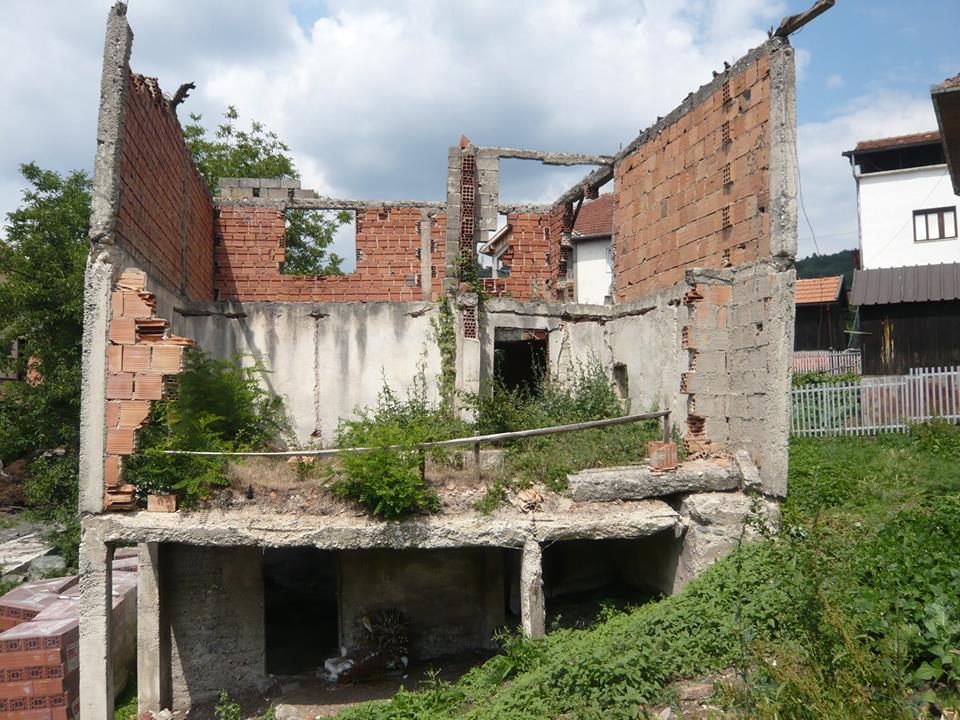
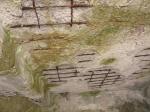
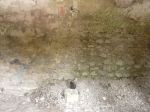
On Thursday 10th of October 2013 Bosnian media reported that the local authorities in the town of Višegrad decided to hold off on the planned decision about the expropriation of a house on Pionirska Street in which on June 14 1992, 53 people were burned alive by Serb paramilitaries. The decision adds to the sense of uncertainty felt by the families of the victims. In 2010 the government of Republika Srpska decided that it was in the public interest to build and expand the roads and regulation of riverbeds. That would mean the destruction of what is left of the house on Pionirska Street. According to victim´s associations in Bosnia and Herzegovina this is an attempt at physically removing any traces of war crimes committed during the Bosnian War. According to Suljo Fejzić, head of the Višegrad municipality someone has deliberately extended the zone of expropriation by 4-5 meters at the exact place where the house is. Also it’s is the only house scheduled for destruction. The families of the victims say that they will continue the struggle. Bakira Hasečić, president of the Women Victims of War Association said that they don´t mind the development plans and the expropriation but that they will not allow that a location they and the victims’ families consider sacred be a part of it.
During the sentencing of Milan and Sredoje Lukić at the war crimes tribunal for the former Yugoslavia in The Hague, for crimes commited in Višegrad the presiding Judge Patrick Robinson noted:
In the all too long, sad and wretched history of man’s inhumanity to man, the Pionirska Street and Bikavac fires must rank high. At the close of the twentieth century, a century marked by war and bloodshed on a colossal scale, these horrific events stand out for the viciousness of the incendiary attack, for the obvious premeditation and calculation that defined it, for the sheer callousness and brutality of herding, trapping and locking the victims in the two houses, thereby rendering them helpless in the ensuing inferno, and for the degree of pain and suffering inflicted on the victims as they were burnt alive. There is a unique cruelty in expunging all traces of the individual victims which must heighten the gravity ascribed to these crimes.
In total, the Trial Chamber found Milan Lukić responsible for the deaths of at least 132 people in Višegrad , that is the figure that the prosecution could prove, in reality he is most likely responsible for many more. Most people knowledgeable on the topic, journalists and human rights activists believe that Lukić probably killed more people during the Bosnian war than anyone else. According to the Trial Chamber: Lukić committed these crimes against vulnerable victims whom he had rendered helpless. Among the victims of the Pionirska Street fire were a seventy-five-year-old woman, six children between the ages of two and four, and a two-day-old infant. The Trial Chamber also noted that survivors of the Poinirska Street and Bikavac fires now live with permanent physical injuries and with the mental anguish that accompanies those who have witnessed and survived the brutality and violence inflicted upon them. The survivors were forced to leave family members or neighbors behind as they tried to escape the inferno.
The background of the Pionirska Street fire was the anti-Bosniak pogrom of the village Kortinik. On June 13th, 1992, a number of Serb militiamen from neighboring villages arrived at Koritnik and told the Bosniak residents the village that they were forced to leave, the residents would be transferred to the Bosnian government controlled area in Kladanj. That was a ruse, the Serb militiamen had no intention of ever letting the 60 or so Bosniak inhabitants of Koritnik leave Višegrad municipality alive.
The next day the Bosniak residents of Koritnik waited for the buses to arrive to take them to Kladanj, as the buses failed to arrive the residents walked southwards to the neighbouring village of Greben, where they continued to wait for the buses. When the buses still failed to arrive, the group continued southwards on foot to downtown Višegrad.
Once they had reached Višegrad, they headed for the local police station, where the policemen told them to go to the nearest Red Cross building, once there the group found the building closed and decided to wait in front of a hotel. According to testimony given by survivors they were told by a young man who emereged from the hotel that all the buses for Kladanj had left earlier that day and that it would be best for them to spend the night in one of the abandoned Bosniak-owned houses on Pionirska Street. The witnesses identified the man as Mitar Vasiljević.
When the Koritnik group arrived on Pionirska Street, they gathered at a vacant house owned by Jusuf Memić, there they were addressed by Vasiljević who told them that a convoy would be available the next day to take them out of Višegrad. They could stay at the Memić house overnight. Vasiljević also assured the group that he would guarantee their safety while they were in the house, should anyone try to harass them or question why they were there. Vasiljević handed a piece of paper to one of the members of the group, which served as a form of guarantee that they were safe.
Approximately one hour later cousins Milan Lukić and Sredoje Lukić came to the house armed and dressed in the olive-green fatigues of the former JNA ( Yugoslav People´s Army) and sporting Serb-nationalist insignia instead of the former JNA´s red star, along with them was Radomir Šušnjar and Vasiljević. They ordered those from the Koritnik group to hand over their valuables and place them in a rag which Milan Lukić had placed on the table in the house, according to the testimony of one of the survivors Lukić: “threatened to sever the fingers, cut the throats and put a bullet in the head of anyone who withheld their valuables.”
After that the women and men were separated from each other, and ordered into adjacent rooms where they were strip-searched. Several of the survivors as well as Huso Kurspahić whose father had survived the fire testified that Milan Lukić removed a number of women from the house, including Jasmina Vila, Ifeta Kurspahić and Mujesira Kurspahić. According to the testimony of one of the survivors: Milan Lukić recognised Jasmina Vila and addressed her saying, “How come you’re here?” Milan Lukić then hugged her and took her and the other women out of the house. The women returned an hour later. They were crying, and one of the women told persons in the group that they had been raped. According to testimony the women looked terrible, “they wouldn’t say anything, neither Ifeta nor Mujesira, and Jasmina Vila only asked for a pill to treat her headache.”
During the trial of Mitar Vasiljević one of the women testified that:
The girls were taken out, and when they returned, they didn’t look quite in shape. Jasmina wanted me to give her a tablet. And we asked them what had happened, and they said, well, you know what happened. They didn’t want to tell anything. And Ifeta, when she came back, she also looked bad, she was crying, and she said, your turn will also come. […] they managed to tell us that they had been raped, and we could see for ourselves, you know, how they looked after they had been mistreated. And she told — they told — they told us to try and escape, because apparently Milan Lukić and others told them that we would all be raped.
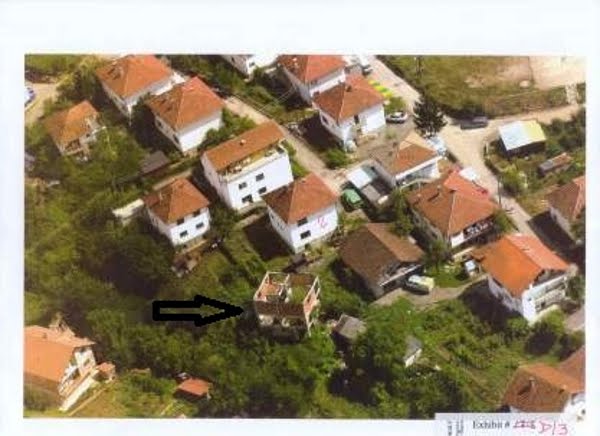
According to testimony of survivors: Milan Lukić, Sredoje Lukić and Mitar Vasiljević returned to Jusuf Memić’s house between 9.30 and 11.30 p.m, it was getting dark and there was no light inside the house, so Lukić and his men ordered the Koritnik group to move to the house of Adem Omeragić. They were told that the “transfer was necessary for their safety” and that they did not need to put their shoes on, Lukić aslo told them to leave their luggage, so that it could be searched for weapons. Adem Omeragić’s house was about 20 to 30 metres away and situated next to a creek that runs in the area of Pionirska street.
The group from Koritnik was herded into into a room on the ground floor of the Omeragić house. One of the survivors testified that she was shoved into the room by one of the Serbs who pushed the butt of his rifle against her back and said, “Get in, balija. What are you waiting for? Where is Alija now to help you?”
One of the witness say that the carpets on the floor of the room were covered with a sticky substance that smelled foul and caused some of the victims to choke. The room was extremely crowded. After about half an hour an explosive device was placed into the room by Milan Lukić, after he placed the device into the room he started firing bursts into the room from his automatic weapon. One of the survivors that had fallen asleep was woken up by the sounds of screaming. One of the survivors managed to make their way through the packed burning room to the window and escape the inferno. The explosive device put there by Milan Lukić set the carpets on fire immediately the flames were up to the ceiling and everything was burning. Half an hour after the fire started the door opened and someone threw a hand grenade into the room.
One of the protected witnesses that had seen the fire and the events unfold gave a statement in 2000 where she described what she saw :
It was in the evening close to the curfew time and I was walking towards the house where I was staying. I saw a large number of people /women, children and old men/ from the nearby villages, majority were from the village of Koritnik, as well as Muslims from Pionirska street who were arrested earlier, forced into a house of Adem Omeragić which was some 7-8 metres from the road. I could see a lot of members of Lukić’s group, him included, around the house. I saw that they were throwing various devices for setting fire into the house including hand grenades and gasoline. I went to my house very fast. They were also shooting bursts of fire into the house and that could be heard for more than an hour. From the balcony I could see smoke and fire and I could hear the screams.
One of those that managed to escape the inferno said that she smashed one of the window panes, but as she tried to get out the window her escape was obstructed by a mesh in the window. Her son who was with her pushed her out from behind the window and while half of her body was out of the window she heard a hand grenade explode. She felt something wet on her hand and felt as if her hand was a bit paralyzed. Shrapnel from the grenade had hit her in the neck and on her head and hand. She stated: “I couldn’t feel my body […] I sort of felt as if half my face was missing.”
Once out of the house, those that had managed to escape could not run away as Lukić and his men were still around, so they hid behind trees and in the creek below the Omeragić house, two of the survivors moved along the creek about twenty meters until they came to a bridge under which they spent the night in the sewage water that flowed through the creek. According to their testimony they could hear screams and gunshots coming from the direction of the Omeragić house for about an hour to an hour and a half after they made their escape.
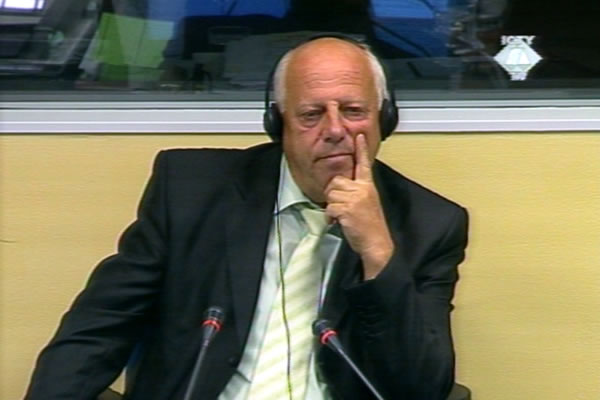
In 2008 during the trial of the Lukić cousins, Huso Kurspahić, a retired Bosniak policeman from Višegrad decided to forgo the protective measures and testify openly about the live pyre in the Pionirska Street in and other crimes committed during the anti- Bosniak pogroms in Višegrad. Huso Kurspahić had lost his mother, two sisters and almost fifty other relatives who were burned alive in the Pionirska Street. In his testimony Kurspahić told the prosecution what his father had told him that Milan and Sredoje Lukić took some seventy Bosniaks from the village of Koritnik – including a newborn baby – to a house, shut them in and set the house on fire. Kurspahić said during the trial his father left him the truth about the event as his legacy. It was his responsibilty to speak about this atrocity.
On July 20th 2009 the Trial Chamber found Milan Lukić guilty of persecution, murder, extermination and other inhumane acts as crimes against humanity, and murder and cruel treatment as violations of the laws or customs of war in relation to six distinct incidents, two of those were the fire on Pionirska Street where 53 people were murdered and the fire on Bikavac where at least 60 people were murdered. He was sentenced to life imprisonment.
The Trial Chamber convicted his cousin Sredoje Lukić of aiding and abetting the crimes committed during the Pionirska Street Incident, except for extermination, and for having beaten detainees at Uzamnica Camp. He was sentenced to 30 years’ imprisonment.
In 2012 the Appeals Chamber upheld Milan Lukić sentence of life imprisonment for crimes commited in Višegrad. While Sredoje Lukić´s sentence was reduced from 30 years imprisonment to 27 years.
Mitar Vasiljević was convicted to 20 years imprisonment for aiding and abetting persecutions on political, racial or religious grounds (crimes against humanity) and murder (violations of the laws or customs of war) on 29th on November 2002. On 2004 The Appeals Chamber reduced his sentence to 15 years.


According to the International Criminal Tribunal
for the Former Yugoslavia,some of the victims that
were burned alive included:
– Kurspahić, Aisa – Approximately 49 years old.
– Kurspahić, Aida – Approximately 12 years old.
– Kurspahić, Ajka – Approximately 62 years old.
– Kurspahić, Alija – Approximately 55 years old.
– Kurspahić, Almir – Approximately 10 years old.
– Kurspahić, Aner – Approximately 6 years old.
– Kurspahić, Becar – Approximately 52 years old.
– Kurspahić, Bisera – Approximately 50 years old.
– Kurspahić, Bula – Approximately 58 years old.
– Kurspahić, Dzheva – Approximately 22 years old.
– Kurspahić, Enesa – Approximately 2 years old.
– Kurspahić, first name unknown –
Approximately 2 days old.
– Kurspahić, Hasa – Approximately 18 years old
– Kurspahić, Hajrija – Approximately 60 years old.
– Kurspahić, Halida – Approximately 10 years old.
– Kurspahić, Hana – Approximately 30 years old.
– Kurspahić, Hasan – Approximately 50 years old.
– Kurspahić, Hasnija – Approximately 62 years old
– Kurspahić, Hata – Approximately 68 years old.
– Kurspahić, Ifeta – Approximately 17 years old.
– Kurspahić, Igabala – Approximately 58 years old.
– Kurspahić, Ismet – Approximately 3 years old.
– Kurspahić, Ismeta – Approximately 26 years old.
– Kurspahić, Izeta – Approximately 24 years old
– Kurspahić, Kada – Approximately 40 years old
– Kurspahić, Maida – Age is unknown,
she was a little girl.
– Kurspahić, Medina – Approximately 28 years old.
– Kurspahić, Medo – Approximately 50 years old.
– Kurspahić, Mejra – Approximately 47 years old.
– Kurspahić, Meva – Approximately 45 years old.
– Kurspahić, Mina – Approximately 20 years old.
– Kurspahić, Mirela – Approximately 3 years old.
– Kurspahić, Mujesira – Approximately 35 years old.
– Kurspahić, Munevera – Approximately 20 years old.
– Kurspahić, Munira – Approximately 12 years old.
– Kurspahić, Munira – Approximately 55 years old
– Kurspahić, Osman – Approximately 67 years old
– Kurspahić, Pasana or Pasija –
Approximately 56 years old
– Kurspahić, Ramiza – Approximately 57 years old
– Kurspahić, Sabiha – Approximately 14 years old
– Kurspahić, Sadeta – Approximately 18 years old
– Kurspahić, Safa – Approximately 50 years old
– Kurspahić, Saha – Approximately 70 years old
– Kurspahić, Sajma – Approximately 20 years old
– Kurspahić, Seila – Approximately 2 years old
– Kurspahić, Seniha – Approximately 9 years old
– Kurspahić, Sumbula – Approximately 62 years old
– Kurspahić, Vahid – Approximately 8 years old
– A boy whose name is unknown – Approximately 11
years old
– Aljić, first name unknown, father of Suhra Aljić
– Approximately 65 years old
– Alijić, first name unknown, mother of Suhra Aljić
– Aproximately 65 years old
– Aljić, first name unknown, son of Suhra Aljic
– Approximately 1 year old
– Aljić, Suhra – Approximately 25 years old
– Jelačić, first name unknown – Age unknown
– Tufekčić, Dehva – Approximately 28 years old
– Tufekčić, Elma – Approximately 5 years old
– Tufekčić, Ensar – Approximately 1.5 years old
– Turjaćanin, Dulka – Approximately 51 years old
– Turjaćanin, Sada – Approximately 29 years old
– Turjaćanin, Selmir – Approximately 9 years old
– Vilić, first name unknown, daughter of Mina Vilic –
Age unknown
– Vilić, first name unknown, son of Mina Vilić –
Age unknown
– Vilić, Mina – Approximately 32 years old
– Vilić, Mirzeta – Approximately 8 years old
– Ajanović, Mula – Approximately 75 years old.
– Delija, Adis – Approximately 2 years old
– Delija, Ajnija – Approximately 50 years old
– Delija, Jasmina – Approximately 24 years old
– Family name unknown – Hasena Age unknown
– Jašarević, Tima – Age unknown
– Jašarević, Hajra – Approximately 35 years old.
– Jašarević, Meho – Approximately 42 years old.
– Jašarević, Mujo – Approximately 47 years old.
– Memišević, Fazila – Approximately 54 years old
– Memišević, Redzo – Approximately 57 years old
– Sadiković, Rabija – Approximately 52 years old
– Sehić, Enver – Approximately 13 years old
– Sehić, Faruk – Approximately 12 years old
– Sehić, Haraga – Age unknown
– Sehić, Kada – Approximately 39 years old
– Velić, Nurka – Approximately 70 years old
– Velić, Tima – Approximately 35 years old
– Vila, Jasmina – Approximately 20 years old

 BH Chronicles
Leave a reply to Open Letter From Bosnian American Genocide Institute and Education Center – BiHbloggen Cancel reply